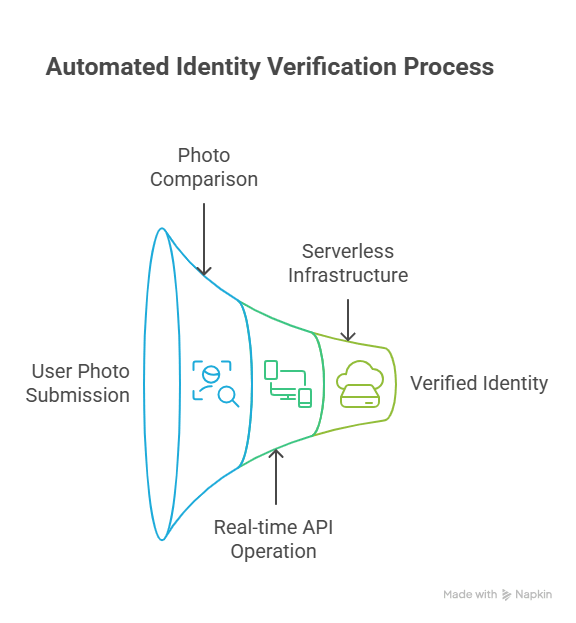
Many platforms rely on Aadhaar for identity verification, but the process typically involves manual validation: slow, error-prone, and vulnerable to spoofing. The objective was to build a system that automatically compares a user’s current photo with the Aadhaar photo, operates in real-time through a web API, and runs on a serverless infrastructure for cost-efficiency and scale.
Key Takeaways
Face recognition for Aadhaar verification uses deep learning to compare live user photos with Aadhaar card images, enabling automated identity validation through serverless APIs. By extracting facial embeddings and comparing them using distance metrics with adjustable thresholds, organizations achieve real-time identity verification responses, cloud-optimized serverless deployment for cost efficiency, higher accuracy through tunable similarity thresholds, enhanced security eliminating spoofing risks, and API-ready integration for web portals, mobile apps, and eKYC workflows.
Problem Statement
Many platforms rely on Aadhaar for identity verification, but the process typically involves manual validation: slow, error-prone, and vulnerable to spoofing.
The objective was to build a system that:
- Automatically compares a user’s current photo with the Aadhaar photo
- Operates in real-time through a web API
- Runs on a serverless infrastructure for cost-efficiency and scale
Solution
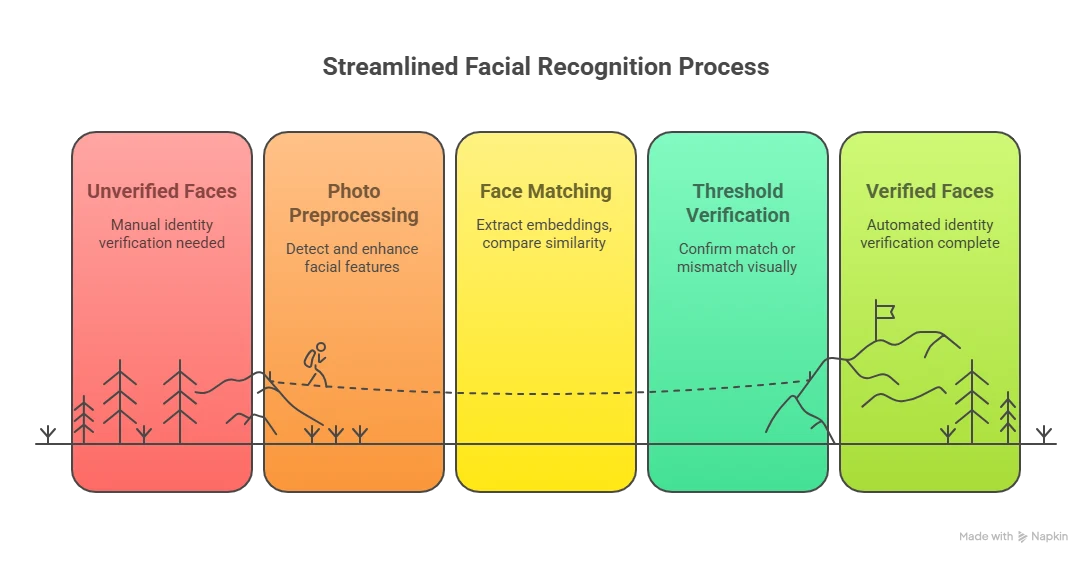
We developed a facial recognition pipeline capable of extracting deep facial embeddings and comparing images using facial similarity metrics. The process is optimized to run in cloud environments with minimal latency.
Key Features
- Photo Preprocessing: Aadhaar and live images are auto-cropped to detect facial features.
- Face Matching: Embeddings from both images are compared using Euclidean distance.
- Threshold-Based Verification: Adjustable similarity thresholds determine pass/fail results.
- Web-Friendly API: Deployable as a plug-and-play REST API for apps and internal systems.
Benefits
- Real-Time Verification: Instant Aadhaar face match response via API.
- Cloud-Optimized: Deploys serverless for cost savings and scalability.
- Higher Accuracy: Facial embedding comparison ensures precision with tunable thresholds.
- Security First: Eliminates spoofing risks with live capture validation.
- API-Ready: Easy integration into web portals, mobile apps, and kiosks.
Conclusion
This Aadhaar-based facial recognition system delivers a modern, secure, and scalable solution for identity verification. It eliminates the need for manual checks, streamlines onboarding, and enhances user trust. Built with real-world performance and enterprise integration in mind, it’s ready for deployment across public and private sector platforms.
Similar Use Cases / Applications
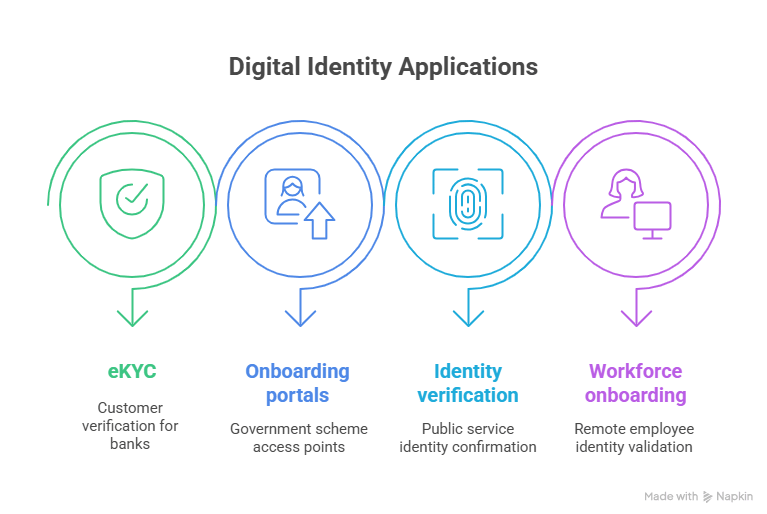
- eKYC: Aadhaar-based customer verification in fintech and banking.
- Govt Schemes: Authenticate users during welfare application or disbursal.
- Kiosks: Aadhaar face match for walk-in service desks or public service stations.
- Remote Onboarding: Verify identity for new hires in distributed teams.